Starting off with Anesthesia Error Lawyer: Calculating Damages for Awareness During Surgery, this introductory paragraph aims to draw in the readers and provide a glimpse of what's to come.
Exploring the nuances of anesthesia errors, the role of lawyers in such cases, and how damages are calculated can shed light on a critical aspect of medical malpractice.
Understanding Anesthesia Errors
Anesthesia errors, in the context of medical malpractice, refer to mistakes or negligence in administering anesthesia during surgical procedures. These errors can lead to various complications, including awareness during surgery, which is when a patient becomes conscious and aware of their surroundings during the operation.
Potential Causes of Anesthesia Errors
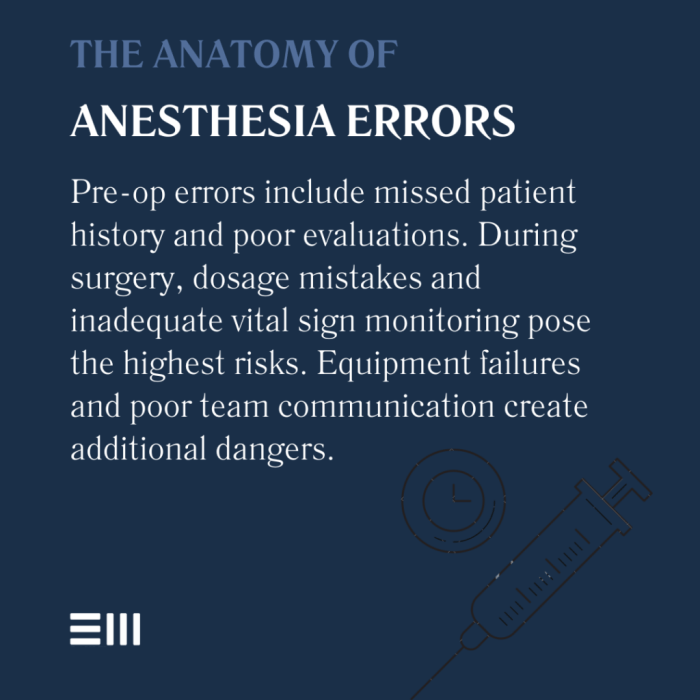
- Incorrect Dosage: Administering too much or too little anesthesia can result in complications.
- Equipment Failure: Malfunctioning anesthesia equipment can lead to errors in delivery.
- Human Error: Mistakes by anesthesia providers, such as incorrect monitoring or administration, can contribute to errors.
- Poor Communication: Lack of communication between medical staff regarding patient history or medication can lead to errors.
Examples of Anesthesia Errors Leading to Patient Awareness During Surgery
- A patient waking up during surgery due to inadequate anesthesia dosage.
- Failure to monitor the patient's vital signs properly, resulting in awareness during the procedure.
- Administering the wrong type of anesthesia, causing the patient to remain partially conscious during surgery.
Role of Anesthesia Error Lawyers
Anesthesia error lawyers play a crucial role in representing individuals who have experienced awareness during surgery due to anesthesia errors. These specialized attorneys have the knowledge and expertise to navigate the complexities of medical malpractice cases related to anesthesia.
Responsibilities of Anesthesia Error Lawyers
Anesthesia error lawyers are responsible for investigating cases where patients have suffered from awareness during surgery. They work closely with medical experts to review the circumstances of the surgery, the administration of anesthesia, and the patient's medical history to determine if negligence or errors occurred.
- Conducting thorough investigations to gather evidence and documentation related to the anesthesia error.
- Consulting with medical experts to evaluate the standard of care provided during the surgery.
- Negotiating with insurance companies and representing clients in court to seek compensation for damages.
Investigation Process of Anesthesia Error Lawyers
Anesthesia error lawyers meticulously investigate cases of awareness during surgery by examining medical records, consulting with experts, and interviewing witnesses. They aim to establish a clear timeline of events leading to the anesthesia error and determine the extent of harm caused to the patient.
Anesthesia error lawyers work diligently to uncover any instances of medical negligence or malpractice that may have contributed to the patient's suffering.
Legal Process of Filing a Claim for Damages
When filing a claim for damages due to anesthesia errors, anesthesia error lawyers guide their clients through the legal process, which includes:
- Evaluating the viability of the case and determining the potential damages that can be pursued.
- Filing the necessary paperwork with the court and serving the defendants with the complaint.
- Negotiating settlements with the opposing party or presenting the case in court if a resolution cannot be reached.
Calculating Damages for Awareness During Surgery
When it comes to calculating damages in cases of awareness during surgery, several factors are taken into consideration to determine the compensation owed to the victim.
Factors Considered in Calculating Damages:
- The extent of physical and psychological harm experienced by the patient during the awareness incident.
- The long-term impact on the patient's quality of life, including any ongoing medical treatments or therapy required.
- The level of negligence or misconduct on the part of the medical staff or anesthesiologist.
- The financial losses incurred by the patient as a result of the awareness incident, such as medical expenses and lost wages.
Types of Damages Claimed in Anesthesia Error Cases:
- Compensatory Damages: These cover the actual financial losses and expenses incurred by the patient due to the anesthesia error, such as medical bills and lost income.
- Non-Economic Damages: These include compensation for pain and suffering, emotional distress, loss of enjoyment of life, and other intangible harms.
- Punitive Damages: In cases of extreme negligence or intentional misconduct, punitive damages may be awarded to punish the responsible party and deter similar behavior in the future.
Quantifying Damages in Lawsuits Related to Awareness During Surgery:
Damages in lawsuits related to awareness during surgery are quantified based on the specific circumstances of each case. For example, a patient who suffered severe physical and psychological trauma during awareness may receive higher compensatory and non-economic damages compared to a patient with less severe consequences.
Additionally, factors such as the patient's age, occupation, and overall health may also influence the final amount of compensation awarded.
Final Conclusion
Wrapping up the discussion on Anesthesia Error Lawyer: Calculating Damages for Awareness During Surgery, the outro offers a concise recap of the key points explored, emphasizing the importance of legal representation in cases of anesthesia errors.
FAQ Guide
What are some potential causes of anesthesia errors during surgery?
Some common causes include incorrect dosages, equipment failures, inadequate monitoring, and human error.
What types of damages can be claimed in anesthesia error cases?
Damages can include medical expenses, lost wages, pain and suffering, and punitive damages in certain cases.
How are damages quantified in lawsuits related to awareness during surgery?
Damages are typically quantified based on medical expenses, lost income, psychological trauma, and the extent of the patient's suffering.