
PFAS water contamination lawyer sets the stage for this enthralling narrative, offering readers a glimpse into a story that is rich in detail and brimming with originality.
As we delve into the complexities of PFAS water contamination and the legal implications surrounding it, a PFAS water contamination lawyer emerges as a crucial ally in navigating this intricate landscape.
Overview of PFAS Water Contamination
Per- and polyfluoroalkyl substances (PFAS) are a group of man-made chemicals that have been widely used in various products such as firefighting foam, non-stick cookware, and water-repellent fabrics. These chemicals have been found to contaminate water sources and pose a significant threat to water quality.
Sources of PFAS Contamination
- Industrial sites: PFAS can be released into water bodies through industrial activities such as manufacturing and processing.
- Landfills: Landfills containing products with PFAS can leach these chemicals into the surrounding groundwater.
- Firefighting foam: PFAS-containing firefighting foam used in training exercises and emergency responses can seep into the soil and water sources.
Health Risks of PFAS Exposure
- Increased risk of cancer: Long-term exposure to PFAS has been linked to various types of cancer, including kidney and testicular cancer.
- Immune system effects: PFAS exposure can weaken the immune system, making individuals more susceptible to infections and diseases.
- Developmental issues: Pregnant women and young children are particularly vulnerable to the negative effects of PFAS exposure, which can lead to developmental delays and other health problems.
Legal Implications and Need for a Lawyer
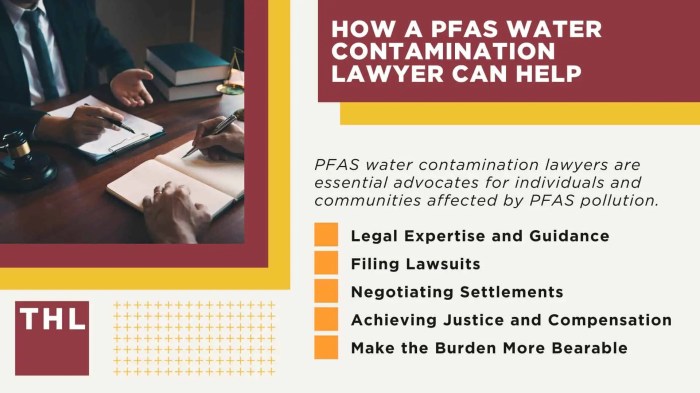
When it comes to PFAS water contamination, the legal implications are significant, and individuals or communities affected by such contamination may require the expertise of a lawyer to navigate the complexities of this issue.
Legal Framework around PFAS Water Contamination
PFAS contamination falls under various federal and state laws and regulations that govern water quality, pollution, and public health. The Clean Water Act, Safe Drinking Water Act, and Comprehensive Environmental Response, Compensation, and Liability Act (CERCLA) are just a few examples of the legal framework that addresses PFAS contamination.
Why Legal Representation is Needed
- Assistance with filing lawsuits against responsible parties for damages caused by PFAS contamination.
- Negotiating settlements with polluters or seeking compensation through litigation.
- Ensuring compliance with environmental regulations and holding polluters accountable.
Relevant Laws and Regulations
- The Clean Water Act: Regulates the discharge of pollutants into navigable waters and sets water quality standards.
- Safe Drinking Water Act: Establishes regulations for drinking water quality and contaminants, including PFAS.
- CERCLA (Superfund Law): Provides a legal framework for addressing hazardous waste sites, including those contaminated with PFAS.
Role of PFAS Water Contamination Lawyer
In cases of PFAS water contamination, a lawyer plays a crucial role in advocating for individuals and communities affected by these harmful chemicals.
Responsibilities of a PFAS Water Contamination Lawyer
- Assessing the extent of contamination and its impact on the affected individuals or communities.
- Investigating the source of PFAS contamination and identifying responsible parties.
- Advising clients on their legal rights and options for seeking compensation.
- Negotiating settlements with responsible parties or representing clients in court.
- Ensuring that clients receive fair compensation for damages caused by PFAS exposure.
Common Challenges Faced by PFAS Water Contamination Lawyers
- Proving the link between PFAS exposure and specific health effects can be challenging due to the complex nature of these chemicals.
- Navigating the legal complexities of environmental law and liability issues involving multiple parties.
- Dealing with well-funded corporations and entities that may try to avoid liability or downplay the impact of PFAS contamination.
- Keeping up-to-date with the latest scientific research and regulations related to PFAS contamination.
Process of Filing a Lawsuit Related to PFAS Water Contamination
It is important to note that the process of filing a lawsuit related to PFAS water contamination can vary depending on the specific circumstances of each case.
- Initial consultation with a PFAS water contamination lawyer to assess the case and determine legal options.
- Gathering evidence, including medical records, environmental reports, and witness testimonies to support the case.
- Filing a complaint in court against the responsible parties, outlining the damages suffered due to PFAS exposure.
- Engaging in pre-trial negotiations or mediation to reach a settlement, or proceeding to trial if a settlement cannot be reached.
- Pursuing legal remedies such as compensation for medical expenses, property damage, and pain and suffering caused by PFAS contamination.
Building a Legal Case
When pursuing a legal case related to PFAS water contamination, it is crucial to gather strong evidence to support your claims and prove liability. This involves a strategic approach to building a solid case against the responsible parties.
Steps Involved in Gathering Evidence
- Conducting thorough investigations to identify the potential sources of PFAS contamination in the water supply.
- Collecting water samples for testing and analysis to determine the presence and levels of PFAS chemicals.
- Gathering documentation such as reports, studies, and records related to the contamination and its effects on the community.
- Interviewing witnesses and experts who can provide valuable insights and information about the contamination.
- Documenting any health issues or damages suffered by individuals as a result of the PFAS exposure.
Strategies for Proving Liability
- Establishing a direct link between the contamination source and the affected water supply through scientific evidence and expert testimony.
- Demonstrating negligence or misconduct on the part of the responsible parties in handling, disposing, or using PFAS chemicals.
- Showcasing the extent of harm caused by the contamination, including environmental damage, health risks, and economic losses.
- Highlighting any violations of environmental regulations or laws that may have contributed to the contamination.
- Utilizing data and research to support the claims of those impacted by PFAS water contamination.
Lawyers Working with Experts
PFAS water contamination lawyers often collaborate with environmental scientists, toxicologists, engineers, and other experts to strengthen their cases. These experts provide valuable insights, conduct specialized studies, and offer expert testimony to support the legal arguments. By working closely with experts, lawyers can enhance the credibility and effectiveness of their legal strategies in PFAS contamination cases.
Final Summary
In conclusion, the role of a PFAS water contamination lawyer is indispensable in seeking justice and accountability in cases of water contamination. Their expertise and dedication play a pivotal role in ensuring that affected individuals and communities receive the legal representation they deserve.
Essential Questionnaire
What does PFAS stand for?
PFAS stands for per- and polyfluoroalkyl substances, a group of man-made chemicals that have been widely used in various industrial applications.
How can a PFAS water contamination lawyer help individuals or communities affected by PFAS exposure?
A PFAS water contamination lawyer can provide legal guidance, file lawsuits, and represent clients in seeking compensation for damages caused by PFAS contamination.
What are some common challenges faced by lawyers handling PFAS water contamination cases?
Lawyers in these cases often encounter difficulties in proving liability, navigating complex regulations, and working with scientific experts to build a strong case.